2013/12/02

One of the main reason i am against the OSR

Look, "Fantastic Heroes & Witchery".

YAOSRG (yet another old-school renaissance game).

Maybe it's cool, and probably it is indeed. The proliferation of new simulacrum is a good thing, i appreciate the inventiveness and creative inspiration of all the guys in any corner of the globe.

Perhaps i will even buy a copy of this new game. I find it enticing.

This phenomenon is like an avalanche. Other simulacrum and clones will surely follow.

It seems like we are now living in a garden full of flowers . New blossoms appears suddenly out of the blue around us. We marvel at it. How fragrant they are. No one can deny it.

Everyone pushes rabidly into the future while the past is a forgotten land.

Is it logical that there are all these new clones and simulacrum around and at the same time one cannot find info and cannot attain knowledge about the old D&D variants such as "The Compleat Warlock" in the internet anywhere?

http://2.bp.blogspot.com/-Wh6au7F3xyY/TzNHxuKeKBI/AAAAAAAAAQo/dTlY59W5V_8/s400/Warlock.png

In the case of such a game, we are talking about a titan in the field of this hobby, a D&D variant of paramount historical importance (a game that arose the anger of TSR back in time and there was IIRC even a lawsuit against it).

Other D&D variants remains totally obscure to 95% of those who are now maybe writing a D&D clone (Nimolee, for instance).

How many bought a copy of "Beasts men & gods" by Bill Underwood when it was reissued a couple of years ago?

And if "Fantastic heroes and witchery" sold more than the new edition of "Beasts men & gods", is it coherent, does it make sense? Aren't we living in an inverted reality?

As far as i am concerned, you are allowed to put all the effort you are capable of in order to devise a new and awesome D&D clone or simulacrum nowadays, but you can't be interested in D&D variants which have yet to come and which have yet to see the light of the day (or that have just been published) - and not nurture interest in the D&D simulacrum published in the past and which shaped the historical development of all this hobby of ours.

This sounds like madness. It's a perverted attitude and i don't want to be part of it.


2013/11/08

Is Tolkien's work inaccessible?

http://tolkienilu.chez-alice.fr/epopee/illustrations/silmarillion/morgoth_et_fingolfin.jpg

 
I always find myself dreaming of a game which can enable to transport players inside the Silmarillion tales. After the glorious days of Merp (which, as far as I am concerned are not expired), Decipher rpg and finally The One Ring rpg I still wonder if the Silmarillion era would be playable using these systems.

I am doubtful that a fantasy rpg specifically tailored for playing the Silmarillion will ever be published; but to entertain myself I thought about what I would want from such a game, hence this post.

Firstly, regardless of who is undertaking this job, I will just offer some generic observations, which have nothing to do with play mechanics. I could call them “corollary observations”.

While i'm certainly not the highest authority on Tolkien on earth, - nonetheless – I know I have my credential to have the right to utter my position.

These are the kind of expectations I would have in ANY case, in fact they are the same I had had for “The One Ring” by Cubicle 7 when they announced they would publish their game.

These are the minimum requirements for me which are mandatory in order to write an rpg based on Tolkien's works.

The only thing I know for certain is that if someone commits himself to such an endeavour, he should put a lot of passion in it and the task would be a long-term one.

I surmise he is a profound admirer of Lotr and The Silmarillion, otherwise he would never have thought to do such a thing. I cannot imagine otherwise.
Such a thing must be taken seriously.

This is due to the unique flavor which permeates Tolkien's work.
This consideration alone should be enough to quiet us and cause many to desist.

The decision of embarking in such a quest entails at least three things:

  • Study the original sources. Not only “Lord of the Rings” and “The Silmarillion”, but each volume of “The History of Middle-Earth” as well edited by Tolkien's son.

This should take months and maybe years (unless you are one of those few persons who can confidently affirm to be already conversant with them up to the point you deem not necessary reading).
Quote paragraphs, trying to infer possible mechanics of play from passages in the books and the like.

  • Take into account works previously accomplished by others who tried the same. I mean, we cannot ignore what others wrote about this and similar-related topics before us (Decipher Lotr rpg, for example).
Even if we disagree with those works or we despise them entirely. A real scholar worthy of this name always delves into the publications available on the subject he is working on, however out-of-date, old, and incomplete they might appear.

  • Most importantly, being aware of the peculiar atmosphere surrounding Tolkien's works, which is quite different from Dungeons & Dragons. It is more important to preserve a tolkienian feeling rather than trying at all costs to emulate it with alien rule-sets.
What is risky here is the possibility of turning a tolkienian role-playing game into something unnatural.

To sum it up, it's not that I maintain that it is impossible to create an rpg based on Tolkien's “The Silmarillion”, but one can say that, as of today no one ever succedeed thoroughly and a satisfying tolkienian rpg of this kind doesn't still exist.
Therefore, any skepticism is well grounded.

Currently I don't have the energy and patience which would be required to help someone developing such a product (i'm not even sure I could be able to do it, frankly – though I studied for a great amount of time aspects of that book such as Magic in the past), so I will wait.

Good luck to anyone who dares.

2013/11/03

HOW TO DESTROY THE PHANTOMS OF PHENOMENA


Or,

Which fantasy rpg can carry me to the dreamworld? PART II

http://www.johncoulthart.com/feuilleton/wp-content/uploads/2008/03/sime2.jpg

It is difficult for me to try to expound this second and final part of my post (the first part can be found here). I think it will end up being a collection of scattered thoughts and feelings, but anyhow I feel I have to conclude it.

I wrote that the boundaries and limits of the fantasy experience we are about to have when we sit at a table ready for playing depends partly on the rule-system we will be using, hence they are set up in advance. Afterwards I wrote that much as the kind of sensory experience we may have rely on and depends on the scientist who put our brain in the vat, in the same way the kind of imaginative experience we may have depends upon the fantasy rule-system we choose to adopt.

Certain subtle feelings and “cerebral joys” are not possible under specific fantasy rule-systems,because they simply cannot convey them. This was the main point of my first post, to try to highlight what I feel is a truth after having perused many old-school fantasy systems of the past.

So, I have no doubts about which fantasy game to use when I want to play a specific kind of adventure: I already know if I had better use Rolemaster or Chivalry or Sorcery or The Complete Warlock, for instance.

It follows from my previous reasoning that I regard different fantasy role-playing games as being endowed with different degrees of “illusory power”, meaning with that term the intrinsic potency of each of them to push the boundaries of reality far and far away.

Sure, all this becomes meaningless when you take into account the propensities of players and the creative, untainted sincere inspiration of a dungeon master to tell a wonderful story which is really pulsating in his heart; in that case success is almost certainly guaranteed, regardless of the system used and the facilities with which one may surround himself in order to reach the climax of a story.

But originally any rule system carries within it a different seed- and as I see it, this seed will decide (to a large extent) the otherwordly outcome of the adventure.

This is also why I have always been for the multiple choices offered by the OSR market: the existence of such diverse fantasy rpgs of the past is the most important aspect of all the OSR movement. We do have different gates to cross, and these gates do not lead to the same dreamland.

If a fantasy game is not able to carry my mind to the dreamworld then it is to no avail, and in a sense a game might even hamper this possibility.


THE ILLUSION FORMULA

Illusion obtains IF the total amount of disbelief (TAD) is above 78.

TAD is the result of the interactions of three main factors:

  • Players' capacity for imagination
  • Game master's storytelling ability
  • Fantasy rule-system used and its mechanics

In all the other cases (that is, whereas a value under 78 is the result of the above formula, we end up with a pleasurable or even a remarkable experience at our game table, nonetheless this experience does not turn into the illusion we are seeking).

NOTES: The Illusion formula takes into account two main aspects: inner and outer aspects.

Inner aspect revolves around the detail and flavour conveyed by the rule-system used, outer aspects encompasses all that pertains to the contribution brought by participation of players, namely their personal ability of immersion in a fictional reality plus the storytelling skills of the Game master.

Firstly, you have to divide these two factors:

PLAYERS' CAPACITY FOR IMAGINATION
FANTASY RULE-SYSTEM USED

The result of the above division is then multiplied times the GAME MASTER'S “STORYTELLING ABILITY”. The number thus obtained is the illusory factor which is then compared to a scale ranging from 3 (incredibly poor) up to 105 (Grand Illusion).

To calculate the illusory factor, keep in mind the following:

- Players' capacity of imagination score ranges from a minimum of 10 (poor) to a maximum of 30 (superb).

  • Depending on which fantasy rule-system you will use, the divisor is going to range from a minimum of 3 (poor fantasy system) to a maximum of 1 (great fantasy system, deep in scope, detailed and inspiring).
  • Finally, the Game master's storytelling ability can range from a minimum of 1 (poor, unexperienced) to a maximum of 3.5 (superb).

As bizarre as it may sound, this is tantamount to an humble attempt to catch a glimpse of what happens when several layers of dull reality fade away whenever we immerse ourselves into the realm of imagination.

The formula above is not precise in any way, it cannot be; but the idea behind it bears some truth to me- though I cannot control or grasp the spiritual power which enfolds whilst telling an adventure and that surrounds me and my players alike, nonetheless I have the faculty of deciding which game is going to be used to reach my purpose.


2013/10/24

A clever way of assigning hit points for your character


An interesting way of assigning hit points for your character may derive from the system found in “Thieves’guild” 2nd edition (1984)  by Game Lords.

I read it today for the first time, and I was very pleased and surprised to see that it somewhat resembles the method used by Powers & Perils system, albeit the latter is even more logical, in my opinion (but more on this, later).

Instead of assigning hit points based on which character class you belong to (as is used in AD&D where a fighter gets a 1d10 or 1d8 if I recall correctly), the system in TG make the following reasoning: add your scores of both  strength and stamina (here, Stamina is different from the concept of Constitution; in a nutshell, the former represents your ability to withstand fatigue and exertion, the latter is your physical health).

Once you come up with the sum of these two attributes, depending on how high that number is, you are entitled to roll a specific die for determing your actual hit points (which, in TG are called “Hits to kill” or HTK).

So it’s as if (under AD&D system) you were not automatically entitled to roll a higher die for your hit points just because you are a fighter whereas a mage may roll no more than 1d4; in fact. AD&D seemingly depicts any magician as a fragile and weak creature who spent all his days doing nothing but studying over dusty tomes of magic- in Thieves guild if a mage has a high rate in stamina or strength he can have many more hit points than we are used to expect.

Powers & Perils goes even further than this and in my opinion is one step beyond: though the system is quite similar to that found in TW that I just explained, in P&P- depending on your scores in stamina, constitution and strength you are automatically assigned a certain number of hit points- without even having to choose a specific type of die by which rolling your hit points (hits to kill).

2013/10/21

Justify your character’s life


What follows is an interesting list of character motivations: someone may notice where it comes from.

I have always thought that any character should start with a reason for his adventuring, and such a list spices things up


2013/10/18

Two tables I would be willing to borrow from Harnmaster


Here they are: two tables of Harnmaster rpg that i like.Both of them are taken from Harnmaster 1st edition (1986) by Columbia games.  The first one are guidelines for a sort of “alignment” system, while the other deals with various activities that a cleric may perform in order to acquire “Piety points” by the expenditure of which the god you worship may be prone to listen to your requests. In this way, we have a cleric unlike that that can be found in AD&D (if I recall correctly) who has to accomplish religious tasks and duties before he can hope to “cast” a clerical spell that works. Of course under special circumstances (that is, if you gain a lot of piety points) your god might even help you on extraordinary occasions where you are risking your very life (for instance, through the bestowing of  a miracle). Quite interesting in my opinion.
https://docs.google.com/document/d/1mloYS-jS28QMq1NYWnB4zo-JyPXwGKMUWw3GKT9R1cY/edit?usp=sharing

2013/09/28

"What price glory" is part of the Holy Trinity

This was sold on ebay a while ago...this is the 2nd time i saw this item for sale in years and years.. I have my copy and as i said before it is one of the most cherished treasure in my collection and i promise i'll talk about it sooner or later.

Together with Bifrost (by Skytrext), Spawn of Fashan, and a few others, these are the items you have to know and PLAY before you die.It is my intention to share all these thoughts, experiences about these forgotten gems on my blog. And if you have faith in me, dear readers, you'll end up having the chance to actually play them, who knows.


2013/07/29

The unsolved problem of Combat in Dungeons & Dragons

I had been thinking for pretty a long time about making a series of posts devoted to the intricacies of D&D's combat.

What i am interested mostly in is the different schools of thought that have always existed, showing that D&D (and AD&D) combat system are unsolved problems as of now, and that different players and dungeon masters are entitled to use different approaches to combat, depending on which philosophy they abide by.

My main intention is to show lesser-known combat systems that have (in a sense) been forgotten and that i maintain are superior to others.

To begin with, an hidden gem from the past, an alternative combat system for D&D from 1979.

I think several game masters around the world have always used this instead of the "official" method.

I admire the profoundity of Mr. Sapienza's detailed analysis, he had visions in his mind.

To see FULL SCREEN images, right-click and the choose "open link in new tab".


Highlighting all the 32 classes of Arcanum: the Beastmaster

One of the most delightful aspect of this old fantasy rpg is the multitude of classes available. It's gorgeous to read all the features of each one, i find it so inspiring.

So,let me show you this wonderful alternative to AD&D back in the days (1984) (see here).

 The image below is just an experiment for now, i'll try to put a sort of full screen image for each class later, if this project arouses enthusiasm or any kind of interest.

beast

2013/07/27

OSR as a rudimentary science


So this that I am about to tell is fortunately an old story but it popped up out of my mind because recently I was emotionally involved in the situation. The account of what happened is as follows: the other day i realized i would probably never come to have and hold a copy o fan old ultra rare fantasy rpg that i have been after for some time.
The story goes like this: I wanted to bid on that item on ebay, but apparently someone was smarter and faster than me and got that copy before me as soon as the seller slightly lowered the price of the item.
Then I sent a private e-mail to one of the Acaeum members that I know owned a copy for sale. He said to me he no longer have that copy and that he sold it not long ago.Not only that, because in the past he managed to track down the original author of this game and he bought from him all the remaining copies and he re-selled them over the years.
Now, keep in mind that there are really 100 copies of this game floating around in the globe, not one more, because one hundred were printed back in 198_
So, to sum it up: no one currently has a copy to sell me, and you have to take into account that no one ever saw a copy of this old fantasy rpg of niche on ebay before some Acaeum member bought the few remaining copies and started re-selling them. He knows for sure that there are just more or less ten copies left and all of them were sold.
Now, I know a fellow collector who actually owns a copy (and he lives in my country) but he is not willing to sell his copy to me, let alone scanning it for me (he would totally ruin and destroy his copy if he tried to do so). So the only chance could be that I went to him with a good camera and took pictures of each single page.
You could utter at this point: why such craziness? Why bother?We are not talking about the last remaining copy of OD&D! It is certainly not worth spending all this suicidal effort to get a glimpse of this, which was in the end simply a collection of someone’s OD&D house rules back in the day
Imagine now that a malevolent genie removed all the extant copies of Rolemaster from existence, and that he cast a spell aimed at deleting from our brains all the memories of that game’s mechanics and rules, but that he left just two things behind :the proof that such a game once was available and –consequently- our awareness that some people chose to play that instead of D&D for reasons unknown to us.
Now, let’s assume it’s year 2050 A.D. People around the world have been scholarly studying the development of fantasy rpg history for quite some time.
We know, for instance, that Holmes (creator of D&D basic) was influenced by Warlock combat system before writing his work. We can presume that Arneson was influenced by Richard Snider (creator of “Powers & Perils”) because they both wrote together an old fantasy rpg named “Adventures in Fantasy”.
We still don’t know if Gygax thoroughly read “Chevalier” and borrowed ideas from it in 1976 when Ed Simbalist met him. All these examples to show that there have always been many relations and influences –many of which still to uncover- since the beginning of the hobby.
The above-mentioned scholars now realizes that they cannot have access anymore to this game called “Rolemaster” and feels at a loss. They only know that it was an alternative to the renowned “Dungeons & Dragons” which started it all.
Now, change the name of Rolemaster with the name of the game I was writing about in my story and you will end up pretty much with the situation I experienced in the last weeks, when I realized I was cut out from the chance of ever getting a physical copy of this piece of history.
So, what was inside this game remains a matter of perplexity. What was its content, why someone felt “compelled” to switch to it after having played the “original” fantasy game can only lead to speculations on my part.
Does this is tantamount to a damage to the OSR? 

I suspect only a few would respond in the affirmative to this question. Many would dismiss this as a false problem. We can simply ignore and skip this, such a fantasy rpg with such a tiny following simply had not an impact on fantasy rpg history considered as a whole, otherwise we would remember it and still have plenty of copies floating around.
So, no real damage was inflicted to the OSR. No need to worry.
As it is easy to guess, my personal position is of another kind.
I maintain that we should feel more or less as if we were studying the development of the English language-from its Anglo-saxon origin and suddenly discovered there is a terrible gap because many documents are lost and we cannot re-build the development of the language.
On the contrary, the discovery of an obscure fantasy rpg, especially one that was purposedly intended as an alternative to original dungeons & dragons should sound (in the ears of the truly devoted scholar, at least) more or less like the discovery of Nag hammadi papyrus books parchments.
All this led me to ponder about the current state of the OSR, where we are, especially what we really know until now, what is our corpus of knowledge?
The answer I saw appearing in front of me was flabbergasting. I visited the rpg encyclopedia to count the old-school fantasy role-playing games which have never received any kind of treatment on blogs and forums.

In particular, i focused my attention on the lack of information and on the lack of a common-shared knowledge about a particular fantasy rpg of the past.
Whenever i realized an absence of information to be gathered on the world wide web about a particular old-school game, that game could be part of my list.

I was impressed to see how many osr fantasy games are still virtually unknown (the case where you can't find any information on the web apart from its title and a very vague description usually amounting to two or three line of text).

From the point of view of a youngster who feels attracted to this hobby and is eager to gather information about old games he never saw personally because they were published much before his birth- and who is consequently taking his first steps in this hobby, thinking the internet will be able to help him...there is a disappointing end waiting.

This is why i say OSR (nowadays, in 2013) is a rudimentary science, it is much less than a fragmentary corpus of knowledge.

This i call penury.

Do anyone is concerned with the poverty of our knowledge in the hobby we state we love and are involved in?

Nowadays, in 2013, after almost 40 years from the first fantasy rpg, the situation is as follows: no way of finding those info on the web, no way of LEARNING.

The process of learning is hampered.

Let's see:


 No information at all anywhere. They just revel in mocking this, but i can tell you there's more than meets the eye.

 Little info. Thanks to a blogger it is now available again, but what you can download is just a portion of the rule system.


 No information at all.

Unbelievable, almost no info at all. Just a pair of posts on Zenopus archive.


 No information anywhere.


 No information anywhere.

 No information anywhere.


 No information anywhere.


 No information anywhere apart from an interview on ToT and recently on my blog as well.


 No information anywhere.

 Kabal and Nimolee: no information anywhere for both of them. Again, for the former they are used to mocking it but the same thing i wrote for Sof applies here as well; for the latter, unbelievably no info despite the fact this was (as Warlock) a direct alternative to OD&D back in the day.


No info at all. People usually tend to think that this game is just folkore/historical and not fantasy but this is wrong. It's just another old fantasy-mythological rpg we know nothing about.


 No info anywhere.


 Little info on some forums.


 No info anywhere. Exactly the same that i said about Warlock applies here.

 Until recently, no info anywhere. Thanks to Thoul's paradise blog, now we have a sufficient knowledge of this game (an alternative to AD&D).


 AFAIK, just one post on the www, some cursory chatting on rpg.net forums if i recall correctly. Unbelievably, because it was a direct (and much praised) alternative to AD&D.

Again, no info anywhere until recently. Thank you Thoul's paradise one more time.


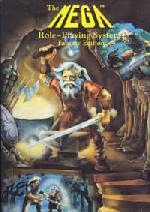
For at least 14 osr fantasy games (see above) there is a complete lack of knowledge (Bifrost, What price glory,, Daemon, Spawn of fashan, Nimolee,Mega fantasy rpg,Phantasy conclave, Castle perilous, Element masters,Vikings & Valkyrs, Archaeron game system, Kabal, Sword’s path:glory,Melanda.
In other cases a partial knowledge (Arduin, Chivalry & sorcery, Rolemaster, Powers & Perils, Fantasy wargaming, swordbearer, Lands of adventure, and others). 
Zorin greystarr, Arcanum, fantasy wargaming, High fantasy recently and not-so-recently received some kind of written treatment.
So you understand why i say that OSR is not a science in this era? It is not tantamount to a science?
Fantasy role-playing games history is still an uncharted territory.
 

Related Posts Plugin for WordPress, Blogger...